Skip to content
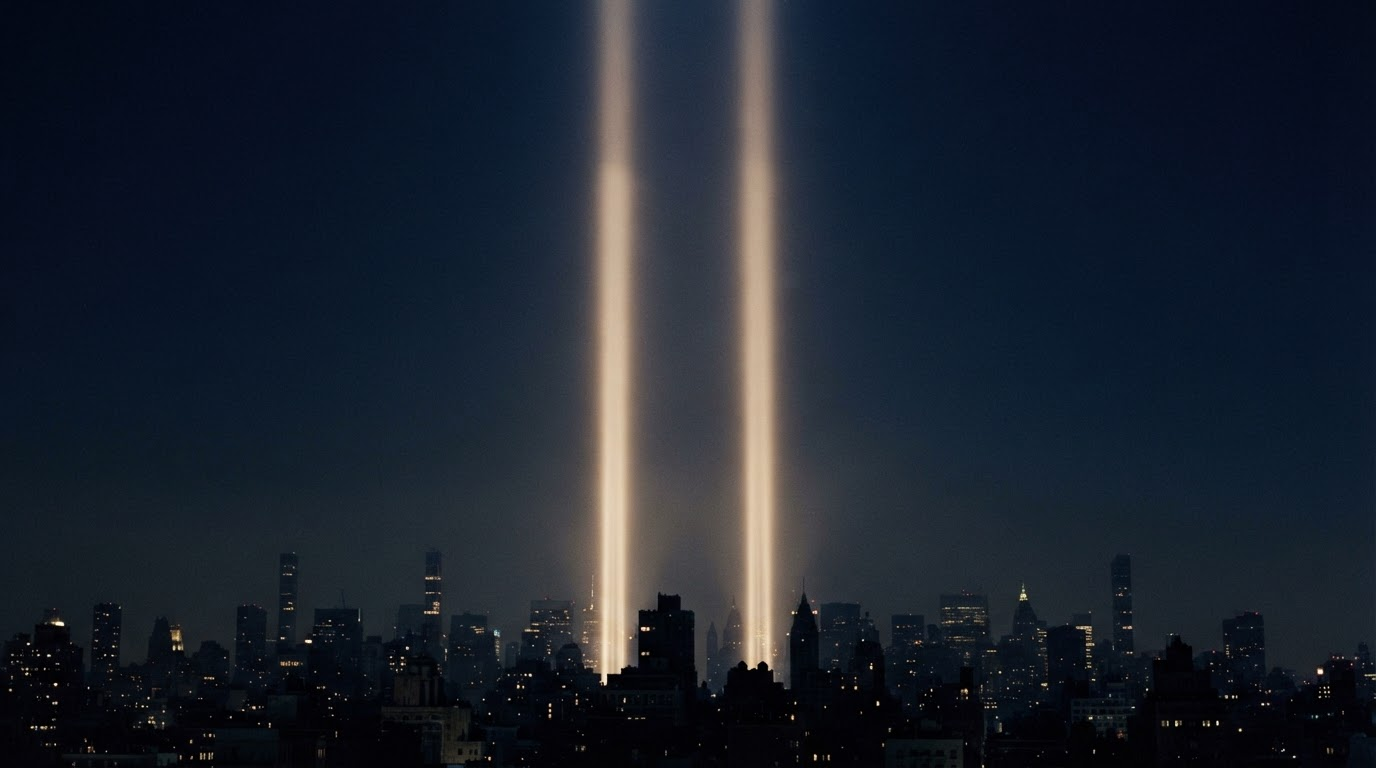
    Two soft beams of memorial light rising into a quiet night sky

    A reflection on September 12

    United We Stood

    Remembering the spirit of mutual care that many people experienced in the days after September 11, without mistaking compassion for a reason or answer to the suffering.

    After the shock

    Nothing redeems the losses. Care still matters.

    September 12, 2001, brought no relief from what had happened. On that day and the days that followed, families were receiving devastating news as they searched for still-missing family members that were never to return. First responders, medical workers, and recovery crews were beginning work that would change their lives.

    And still, across the country, many people experienced a shared impulse to help. Neighbors checked on neighbors. Strangers waited in line to give blood, brought supplies to collection points, opened their homes, and stood together in houses of worship and public squares.

    This page remembers that mutual care on its own terms. The compassion that followed does not balance the lives lost, soften the harm, or turn the attacks into a source of good. It shows something about people that was already there but was brought out by the aftermath of those attacks, a capacity for presence, service, and tenderness in an hour of fear.

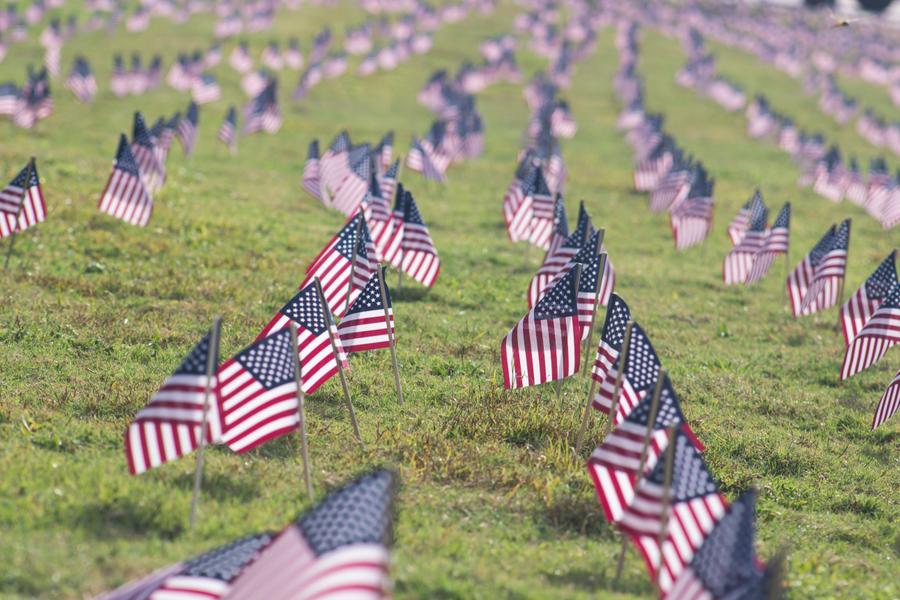
    Rows of American flags set across a grassy field

    Small symbols, shared meaning

    When the flags appeared

    In the days after the attacks, American flags appeared in windows, on porches, at places of work, and along roadsides. People wore small pins, placed flags on vehicles, and found whatever form of the stars and stripes they could display.

    For many, the flag was less a declaration than a quiet language of belonging: I am grieving too. I see you. I am standing with my neighbors. The symbol held many feelings at once, including sorrow, resolve, gratitude, and a wish to feel less alone.

    The gesture was broad but never identical for everyone. Remembering it honestly leaves room for different experiences of patriotism, grief, and belonging.

    From feeling to service

    When feeling became action

    President George W. Bush speaks through a bullhorn among firefighters and rescue workers at Ground Zero on September 14, 2001.

    President George W. Bush speaks through a bullhorn beside retired New York City firefighter Bob Beckwith at Ground Zero, New York City, September 14, 2001.

    White House photo by Eric Draper. Source: National Archives and Records Administration, NAID 5997294.

    People gather around a sympathy display outside St. Paul’s Chapel in New York on November 18, 2001.

    People gathered at a sympathy display in front of St. Paul’s Chapel, a Trinity Church parish chapel near the World Trade Center, New York, November 18, 2001.

    Photo by Dtobias, own work. Source: Wikimedia Commons file page. License: CC BY-SA 3.0.

    Gifts given freely

    People arrived at blood centers, gathered supplies, raised funds, and found practical ways to help. Others kept lines moving with water, food, directions, and a reassuring word. Care became something people could do with their own hands.

    The response was expressed in symbols, but it was also physical and specific. People gave what they had, joined difficult work, and made room for travelers they had never met.

    A FEMA rescue worker speaking with a colleague inside the Ground Zero debris pile on September 20, 2001.

    New York, September 20, 2001. A rescue worker speaks with a colleague inside the pile at Ground Zero.

    Photo by Andrea Booher / FEMA News Photo (FEMA Photo by Andrea Booher/Released). Source: U.S. Customs and Border Protection, U.S. Department of Homeland Security, Media Library asset 30137.

    Those who went toward the work

    First responders, medical workers, recovery crews, tradespeople, search teams, and volunteers carried the work forward in dangerous and exhausting conditions. Their service continued long after the first day, often with costs that would only become clear over time.

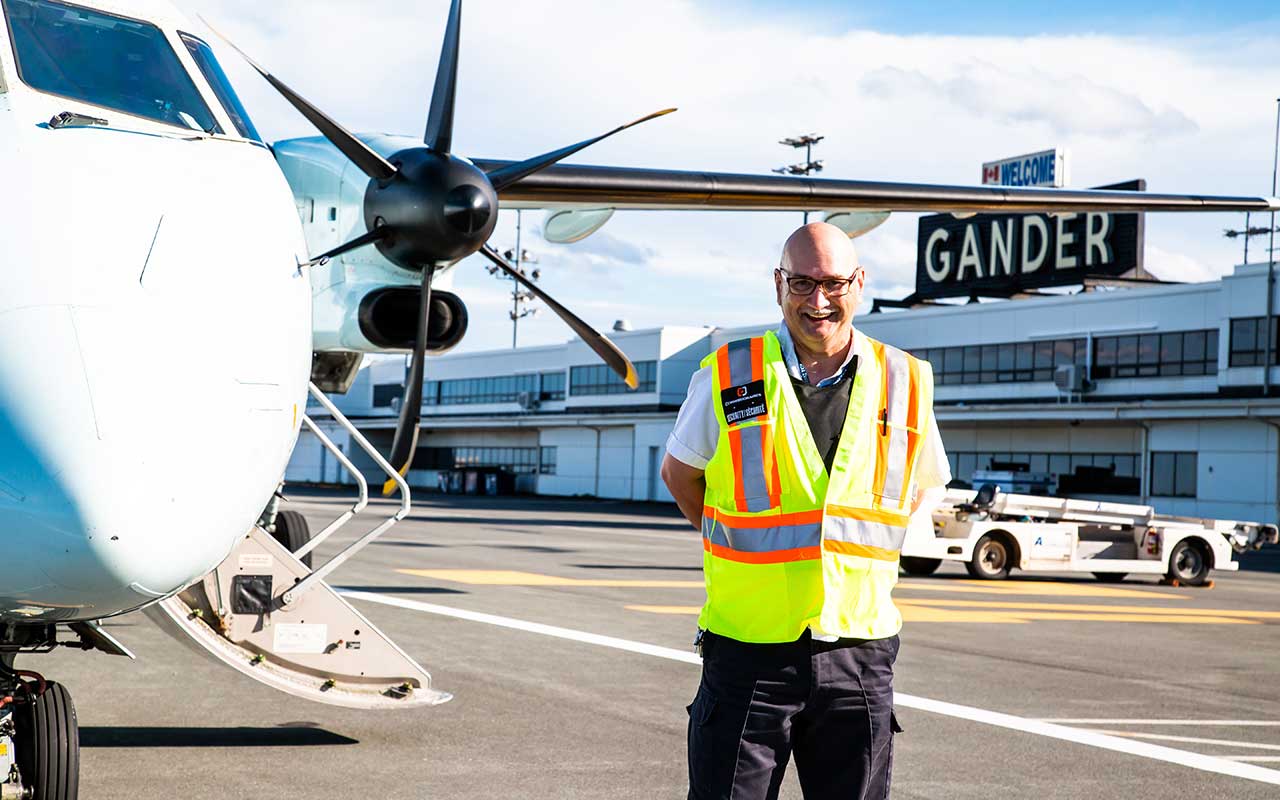
    Contemporary Gander International Airport photograph of a staff member beside an aircraft beneath the terminal's visible “WELCOME GANDER” sign.

    Contemporary photograph at Gander International Airport showing a staff member beside an aircraft beneath the terminal's visible “WELCOME GANDER” sign. It is not an archival photograph from September 2001 and does not show the diverted passengers.

    It is used as a present-day visual reference for the welcome Gander extended to travelers whose flights were diverted there after September 11.

    Photo courtesy of Gander International Airport Authority. Source: Gander International Airport media library.

    Doors opened to strangers

    When flights were grounded and journeys were interrupted, communities far from the attacks, such as the town of Gander, Newfoundland, offered meals, clothing, beds, and company to people suddenly far from home. Hospitality became a quiet part of the national response.

    A temporary common ground

    A country briefly in common purpose

    Firefighters and rescue workers move beneath an American flag at Ground Zero, viewed through a broken window

    The American flag raised to fly among the wreckage at Ground Zero

    U.S. Navy photo by Journalist 1st Class Preston Keres, September 14, 2001. National Archives, NAID 6527676

    For a time, neighbors, houses of worship, civic groups, workplaces, and public leaders found a shared language of grief and responsibility. Candlelight gatherings filled familiar places. People who did not know one another sat together, prayed together, or looked for a useful task. On the evening of September 11, 2001, members of Congress from both parties stood together on the Capitol steps and spontaneously sang “God Bless America.”

    The unity was temporary and incomplete. People did not suddenly agree on every question, and later policy and history remain complex. Still, a broad public willingness to show up for one another became part of how many people remember those months.

    Official C-SPAN recording of the actual September 11, 2001 gathering on the U.S. Capitol steps, where members of Congress sang “God Bless America.”

    Video: C-SPAN, “September 11, 2001 - Congress Sings God Bless America on Capitol Steps”. Official C-SPAN upload.

    Watch on C-SPAN YouTube · Event context on C-SPAN.

    What people made room for

    • Shared mourning without a performance
    • Service that met immediate needs
    • A neighbor’s presence before an explanation

    A changing information landscape

    Before the algorithm

    September 2001 belonged to a more shared broadcast and face-to-face environment. Comparing it with the present can clarify what changed without pretending that the past was simple or the present is beyond repair.

    2001

    A smaller shared frame

    Most people encountered the day through a handful of broadcasters, newspapers, radio stations, and conversations in person. That environment did not erase disagreement, but it meant many Americans saw the same images and basic facts at roughly the same time.

    Today

    Many paths through the day

    Information now travels through a wider, more personalized mix of sources and feeds. It can connect people quickly, while also placing neighbors in very different informational worlds. The difference is worth noticing without turning either era into a simple story.

    The September 12 spirit

    Unity was not created by tragedy. It revealed capacities that were already there.

    That spirit should not require another catastrophe. Compassion, courage, service, and neighborliness can be practiced in ordinary time, when no headline compels them and no shared emergency makes the choice for us.

    Dawn light over a misty American river valley

    A practice for ordinary days

    Carrying the light forward

    The people who helped after September 11 did not wait for a perfect plan. They noticed what was needed and moved toward it. We can honor that example through human-sized acts of care, without claiming that any small gesture can repair a historic wound.

    • Check on a neighbor before a crisis makes the invitation urgent.
    • Offer time, skill, attention, or practical help where it can be used.
    • Make room for shared civic life, especially with people outside your usual circle.